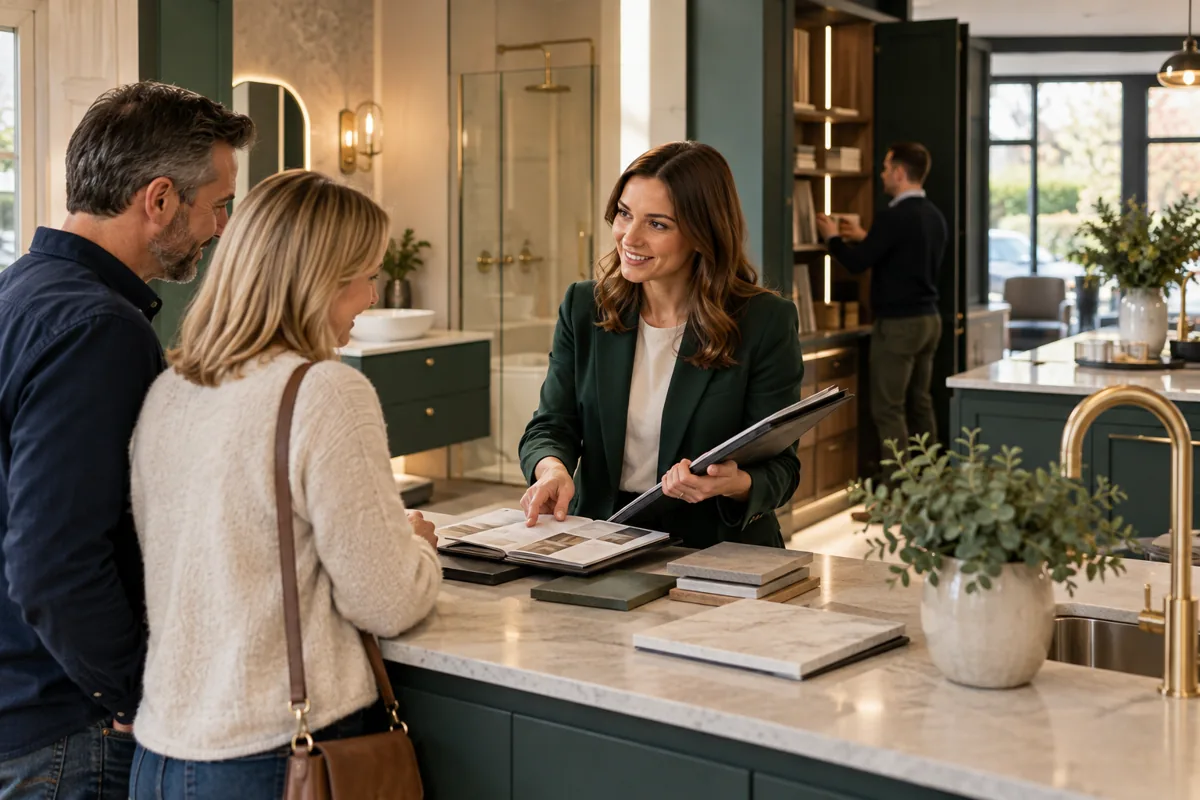
Start with a clear purpose
A design consultation can end with several possible next steps: more information, a revised brief or another meeting. Follow-up should reflect the actual agreement and help the customer progress without losing the designer’s context.
Record the agreed next step
Capture what the designer and customer decided, including who will provide information and which conversation comes next. Avoid substituting a generic sales prompt for a specific commitment.
If the customer agreed to send an updated floor plan, the follow-up should provide the approved route and retain that purpose in the record.
The consultation outcome should become a specific working action. Identify whether the designer will review something, the customer will provide information or another conversation needs to be arranged. Avoid a single generic status that conceals who is responsible. If the business owes an answer, do not send a prompt implying that the customer is delaying progress. A concise note of the agreement gives the follow-up a useful purpose and helps another colleague continue the project without asking the customer to reconstruct the meeting.
Route design questions correctly
Pass questions about layouts, products or scope to the person responsible for answering them. Automated follow-up should not approve changes or promise that a proposed arrangement is feasible.
A request to move a fitting or change a furniture run needs designer review rather than an automatic confirmation that the change is included.
A design question needs to reach the person who can answer it. Capture the actual request and distinguish it from an approved change. A customer asking whether an appliance, fitting or furniture run could move has not necessarily instructed a revision, and the business has not necessarily accepted it. Keep that status clear in the record and acknowledgement. Where the designer needs further information, make the request proportionate and use the approved sharing route. Routine messages should never imply that a proposed change is included simply because the customer asked about it.
Offer a purposeful follow-up meeting
Explain what the next appointment will cover and include the existing project brief. The customer should understand why another conversation is useful.
A kitchen appointment to review outstanding design questions is different from a new enquiry consultation and should be labelled accordingly.
A further appointment should have an identifiable purpose. Use a description such as reviewing outstanding questions where that matches the actual process, rather than treating the person as a new enquiry again. Preserve the existing brief and identify any material the designer has agreed to consider. If another colleague conducts the meeting, make the transfer clear. The customer should not have to repeat every project detail because the diary changed. Equally, the invitation should not imply that choosing a slot commits them to an order or confirms the design.
Respect decision-making time
Ask when the customer would find a follow-up useful and record the preference. Keep messages relevant to their project instead of creating pressure through invented deadlines.
If the customer wants to discuss options with another household member first, an agreed later check-in is more useful than repeated prompts to make a decision.
Decision time should follow the customer’s expressed preference and any genuine business terms explained by the responsible team. Do not create urgency in an automated follow-up simply to encourage a response. If the customer needs to discuss options at home or wait for related work, record that context and agree an appropriate continuation. A relevant later conversation may be more useful than repeated prompts. Requests to pause or stop should alter the active sequence, not remain in a note while the original messages continue to arrive.
Keep the project status accurate
Update whether the customer is progressing, waiting, pausing or declining. Clear status helps the designer manage active work and prevents contradictory contact from the wider team.
A project paused because building plans changed should not appear as an unanswered active design request to the next person reviewing the record.
The project status should describe the present situation. Separate progressing, waiting for our response, waiting for customer information, paused and declined where those categories serve the business. The distinction guides the next action and gives designers a more honest view of their work. A project that has paused because plans changed is not the same as an unanswered active design brief. When the customer chooses not to proceed, acknowledge the decision and close the relevant follow-up route. Clear closure prevents another team member from unknowingly reopening the same conversation later.
Test the details that make the difference
Imagine a customer who leaves a kitchen consultation agreeing to send updated drawings. The next message can provide the approved route for those drawings and explain what happens after receipt. It should not ask whether they are ready to finalise the project while the designer is still waiting for the information needed to continue. A small mismatch like this can make an otherwise professional meeting feel disconnected from the later experience.
Now consider a bathroom customer whose questions have been answered and who wants another discussion involving a household member. A purposeful follow-up appointment can help, provided the brief reaches the right person and the meeting is described accurately. These two customers are both after a consultation, but they need different next steps. Test the workflow against that distinction rather than approving one universal post-meeting sales sequence.
Galaxy SaaS Agency helps organise relevant follow-up and appointment coordination around the business’s agreed process, with reminders and supported CRM handover. Designers remain responsible for advice, revisions and project commitments. Review whether agreed actions are completed and whether customers can reach an appropriate next conversation. Keep those operational outcomes separate from orders, which depend on the design, proposal, project circumstances and the wider customer decision.
Ask designers to flag follow-up messages that conflict with their meeting notes. Correct the underlying status or trigger rather than relying on a personal explanation each time. The useful system is one that continues the actual conversation and makes responsibilities clear across the team.
A follow-up appointment should retain the distinction between a question and an agreed change. If a customer asks to explore another layout, the designer needs to review it before later messages describe it as the new plan. Check that summaries and task labels do not turn tentative language into approval. Accurate status wording supports a useful next meeting without creating an unintended project commitment.
Put the process into practice.
Galaxy SaaS Agency provides a 24/7 automated appointment-setting team for enquiry response, agreed qualification, follow-up, calendar booking and reminders. Explore the service for kitchen, bathroom & fitted furniture showrooms, or discuss your enquiry flow with our team.
Discuss your appointment process